Being a student in Nigeria comes with many financial challenges. From school fees to accommodation, feeding, transport, data subscriptions, and personal needs, expenses can quickly pile up.
For many students in cities like Abuja, Lagos, and other parts of the country, managing money wisely is not just an option, it is a survival skill.
Learning how to save money early can help students avoid financial stress and build strong money habits that last beyond school.
This guide explains practical student budgeting tips in Nigeria and how to reduce expenses without sacrificing your basic needs.
Why Saving Money as a Student is Important
Many students underestimate the importance of financial discipline. However, learning how to manage money early gives you several advantages:
- Less financial stress
- Better focus on studies
- Avoiding unnecessary debt
- Building future financial habits
- Learning responsibility
Saving money is not about being stingy, it is about being smart.
Steps On How to Save Money as a Nigerian Student
Step 1: Understand Your Income and Expenses
The first step in saving money is knowing how much you receive and how you spend it.
Many students receive money from:
- Parents or guardians
- Scholarships
- Part-time jobs
- Side hustles
Then, they spend on:
- Feeding
- Transport
- Accommodation
- Data subscription
- Personal needs
- Social activities
Once you understand your spending pattern, it becomes easier to control it.
Step 2: Create a Simple Budget
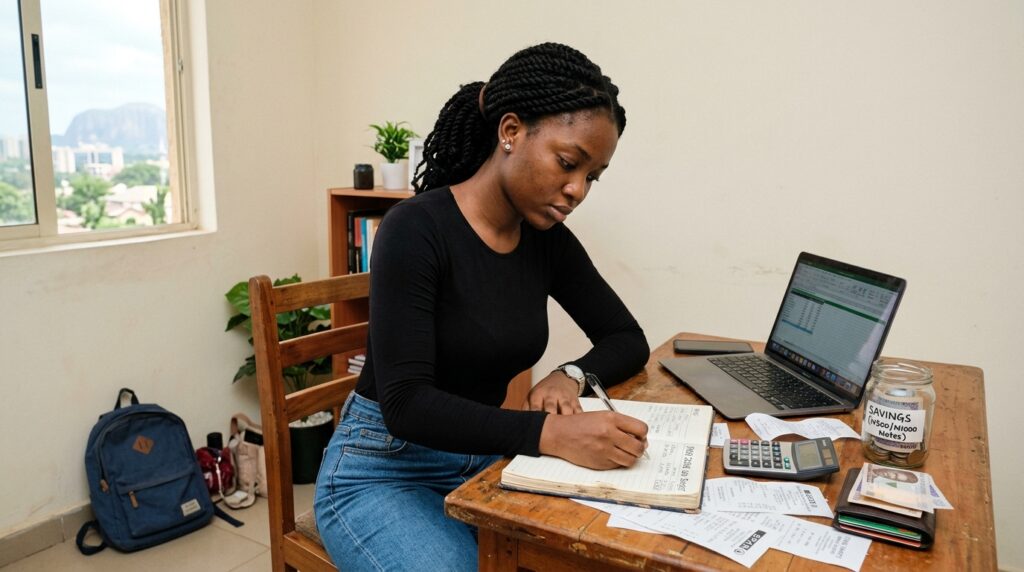
A budget is a plan for your money.
Even a basic budget helps you stay organized.
For example:
- Feeding: ₦X
- Transport: ₦X
- Data: ₦X
- Savings: ₦X
- Miscellaneous: ₦X
Always allocate a portion of your money to savings first, even if it is small.
Many successful students in Abuja follow simple budgeting habits to avoid unnecessary spending.

Step 3: Reduce Unnecessary Spending
One of the biggest money-wasting habits among students is spending on things they do not need.
Examples include:
- Excessive hangouts
- Impulse buying
- Unplanned food orders
- Constant online shopping
- Expensive lifestyle habits
Before buying anything, ask yourself:
“Do I really need this?”
This simple question can help you save a lot.
Step 4: Cook More, Eat Out Less
Food is one of the biggest expenses for students.
Eating out regularly is more expensive than cooking at home.
If possible:
- Cook simple meals
- Buy food in bulk
- Share cooking costs with roommates
This habit alone can significantly reduce monthly expenses.
Step 5: Manage Transport Costs
Transport is another major expense for students in Nigeria.
To reduce costs:
- Use public transport when possible
- Walk short distances
- Plan your movement ahead
- Avoid unnecessary trips
Students who manage transport wisely save more money monthly.
Step 6: Control Data Usage
In today’s digital world, data is essential, but it can also become expensive if not managed properly.
To save data:
- Use Wi-Fi when available
- Turn off background data
- Avoid unnecessary streaming
- Download content once instead of repeated usage
Smart data usage helps students reduce monthly expenses.
Step 7: Avoid Peer Pressure
Peer pressure is one of the biggest reasons students overspend.
Many students spend money trying to:
- Impress friends
- Follow trends
- Keep up with social lifestyle
True financial discipline means making decisions based on your budget, not pressure from others.
Step 8: Learn a Skill to Earn Extra Income
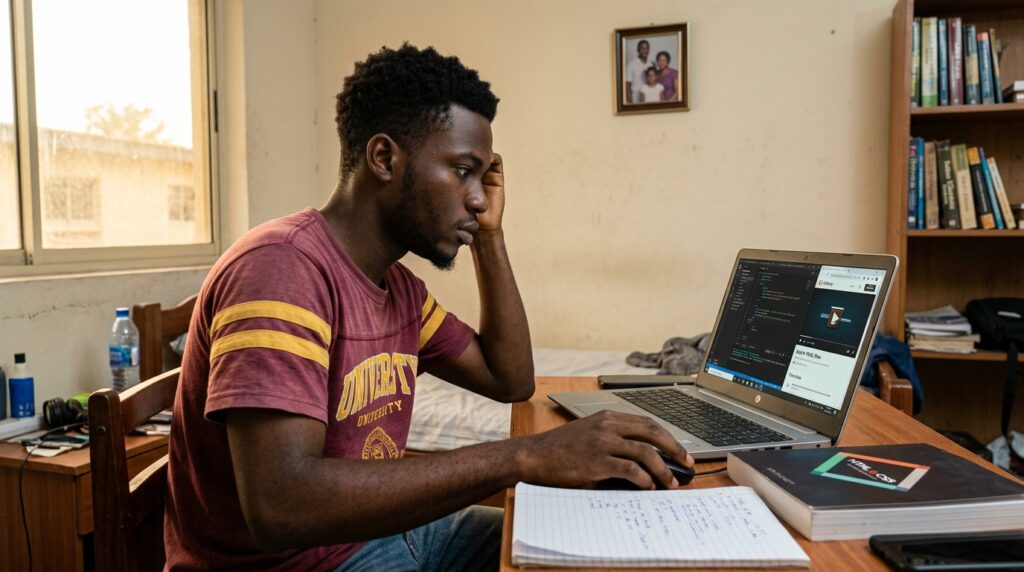
One of the best ways to save money is to earn additional income.
Students can learn skills such as:
- Graphics design
- Freelancing
- Social media management
- Content writing
- Video editing
- Web development
These skills allow students to earn money while studying.
Many students in Abuja now combine school with digital skills to support themselves.
Step 9: Save First, Spend Later
A powerful saving habit is to set aside money immediately after receiving it.
Instead of spending first and saving what remains, do the opposite:
- Save first
- Then spend the rest
Even small savings accumulate over time.
Step 10: Track Your Spending
If you do not track your spending, you may not know where your money goes.
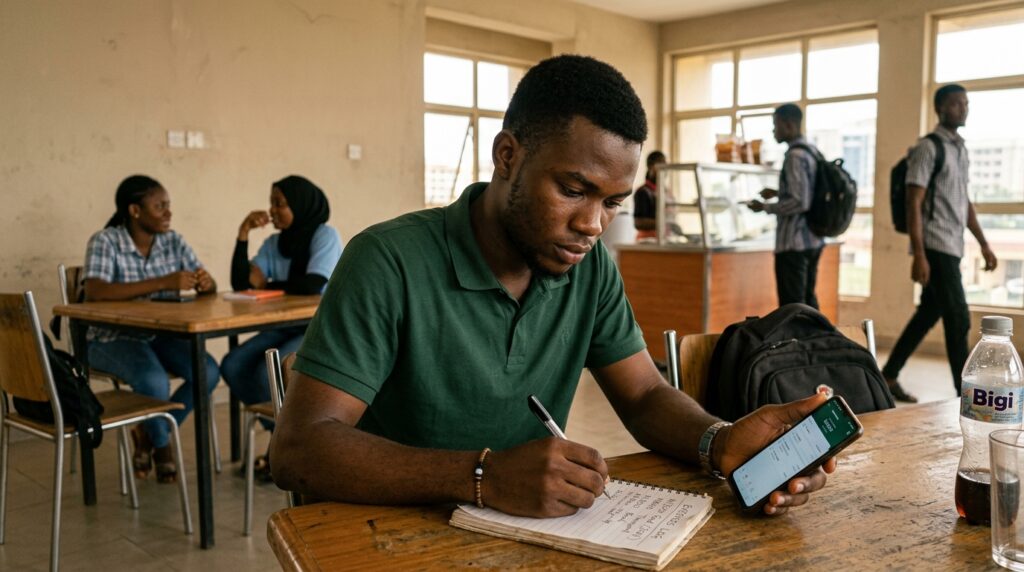
You can track expenses using:
- A notebook
- Mobile apps
- Simple spreadsheets
Tracking helps you identify unnecessary spending habits.
Student Budgeting Tips in Nigeria
Here are additional practical tips for students:
- Buy essentials in bulk
- Share costs with roommates
- Use student discounts where available
- Avoid unnecessary subscriptions
- Stick to a monthly budget
Small changes can make a big difference.
How Students in Abuja Manage Money
Many students in Abuja manage money by:
- Living in shared accommodation
- Cooking together
- Using public transport
- Taking part-time jobs
- Learning digital skills
The goal is not to eliminate spending completely, but to manage it wisely.
Saving Habits for Nigerian Undergraduates
Good saving habits include:
- Setting financial goals
- Avoiding impulse spending
- Budgeting monthly income
- Saving consistently
- Living within means
These habits help students build financial discipline early.
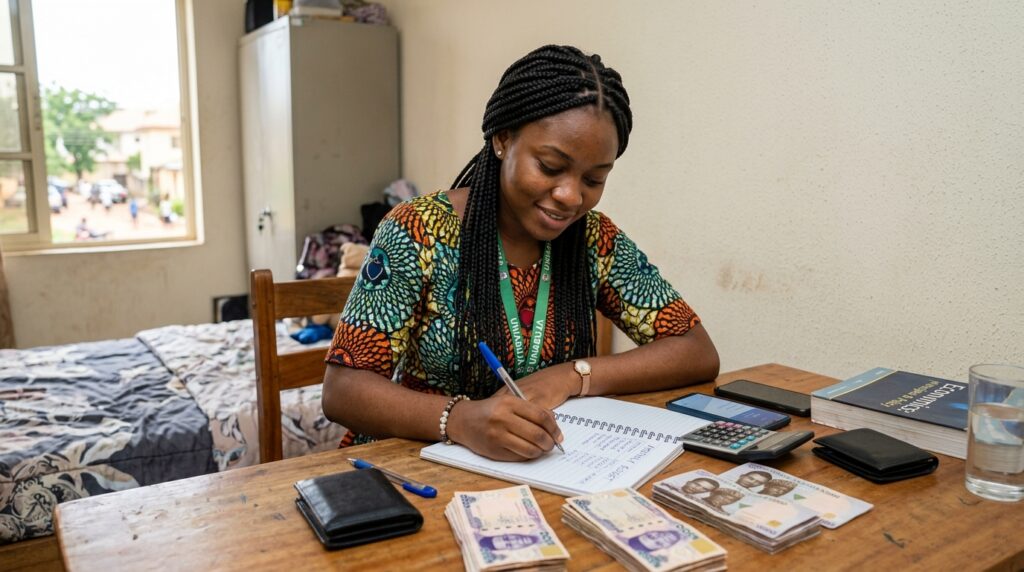
How to Cut Expenses as a Student in Nigeria
Some effective ways include:
- Reducing entertainment spending
- Cooking instead of eating out
- Sharing resources with friends
- Using affordable transport options
- Prioritizing needs over wants
Cutting expenses does not mean living poorly; it means living wisely.
Common Money Mistakes Students Make
Many students struggle financially due to:
- Lack of budgeting
- Overspending on wants
- Ignoring savings
- Peer pressure
- Poor financial planning
Avoiding these mistakes improves financial stability.
Final Thoughts
Saving money as a student in Nigeria is not about how much you earn, but how well you manage what you have. With proper budgeting, discipline, and smart financial habits, students can reduce stress and gain control over their finances.
By making small but consistent changes in spending habits, students can build a stronger financial future even before graduation.
Frequently Asked Questions (FAQ)
-
How can I save money as a Nigerian student?
By budgeting, reducing unnecessary expenses, tracking spending, and saving regularly.
-
What are the biggest expenses for students in Nigeria?
Food, transport, accommodation, and data subscriptions are the most common expenses.
-
Can students in Abuja earn money while studying?
Yes. Many students earn through freelancing, digital skills, and part-time jobs.
-
How much should a student save monthly?
Even small amounts like 10–20% of income can be a good start.
-
What is the best way to manage student money?
Budgeting, discipline, and consistent saving habits are the most effective methods.