Artificial Intelligence is no longer a future concept, it is already shaping how businesses operate in Nigeria. From small shops to large companies, entrepreneurs are now using AI to improve productivity, reduce costs, and increase profits.
Today, AI for SMEs is one of the fastest-growing trends in the Nigerian business space. Small and medium-sized businesses are using AI tools to compete with larger companies in smarter and faster ways.
This article explains how Nigerians are using AI for business growth, especially in marketing, customer service, and automation.

Why AI Is Becoming Important for Nigerian Businesses
Businesses in Nigeria are adopting AI because it helps them:
- Save time and reduce workload
- Improve customer experience
- Increase sales and marketing efficiency
- Automate repetitive tasks
- Make smarter business decisions
Even small businesses now have access to tools that were once only available to large corporations.
1. AI for SMEs in Nigeria
Small and medium-sized businesses are the backbone of the Nigerian economy.
With AI, SMEs can now:
- Automate daily tasks
- Manage inventory more efficiently
- Predict customer behavior
- Improve decision-making
For example, a small fashion business in Lagos can use AI tools to predict which clothing styles will sell more during festive seasons.
This is why AI for SMEs is becoming a game changer in business growth.
2. AI for Marketing in Nigeria
Marketing has changed completely with the introduction of AI.
Businesses now use AI for marketing to:
- Create social media content
- Run targeted ads
- Analyze customer behavior
- Improve engagement rates
How Nigerian Businesses Use It:
- Small businesses use AI to write Instagram captions
- Online stores use AI to optimize ads
- Startups use AI to track customer engagement
AI helps businesses reach the right audience faster and at lower cost.
3. AI for Customer Service
Customer service is one of the most important parts of any business.
With AI for customer service, Nigerian businesses now use:
- Chatbots for instant replies
- Automated WhatsApp responses
- AI email assistants
- 24/7 customer support tools
Benefits:
- Faster response time
- Better customer satisfaction
- Reduced workload for staff
For example, an online store in Abuja can use a chatbot to answer customer questions even at night.
4. AI Automation in Nigeria
One of the biggest benefits of AI is automation.
AI automation Nigeria is helping businesses reduce manual work and improve efficiency.
What Businesses Automate:
- Invoice generation
- Social media posting
- Email marketing
- Data entry
- Appointment scheduling
Instead of doing repetitive tasks manually, businesses now let AI handle them.
This allows owners to focus on growth and strategy.

5. AI in E-commerce and Online Stores
Online businesses in Nigeria are also benefiting from AI.
E-commerce platforms now use AI to:
- Recommend products to customers
- Track customer shopping behavior
- Improve pricing strategies
- Manage logistics efficiently
This helps online stores increase sales and improve customer satisfaction.
6. AI for Content Creation
Many Nigerian businesses are now using AI to create content.
This includes:
- Blog writing
- Social media posts
- Product descriptions
- Advertisements
AI tools help businesses save time and produce content faster.
However, human creativity is still important for making content more relatable.

7. AI in Financial Management
AI is also helping businesses manage their finances better.
Companies use AI tools to:
- Track expenses
- Predict revenue
- Manage budgets
- Detect fraud
This helps business owners make better financial decisions.
8. AI in Customer Data Analysis
Understanding customers is key to business success.
AI helps Nigerian businesses analyze:
- Buying patterns
- Customer preferences
- Market trends
This allows businesses to create better products and services.
9. AI for Startups in Nigeria
Startups are among the biggest users of AI in Nigeria.
They use AI to:
- Build products faster
- Reduce operational costs
- Scale businesses quickly
- Improve customer engagement
AI gives startups a competitive advantage in a crowded market.
10. Challenges of Using AI in Nigeria
While AI is powerful, there are some challenges:
- Lack of awareness
- Limited technical skills
- Cost of advanced tools
- Internet connectivity issues
However, these challenges are reducing as more people learn digital skills.
Future of AI in Nigerian Business
The future of AI in Nigeria is very promising.
We will see more:
- Automated businesses
- AI-powered startups
- Smart customer service systems
- Data-driven decision-making
Businesses that adopt AI early will grow faster than others.
How Businesses Can Start Using AI
If you are a business owner, you can start with:
- Free AI tools for writing and marketing
- Chatbots for customer service
- Automation tools for daily tasks
- AI analytics tools for business insights
Start small and scale gradually.
Final Thoughts
AI is transforming how businesses operate in Nigeria. From AI for SMEs to AI for marketing, AI for customer service, and AI automation Nigeria, the opportunities are growing rapidly.
Businesses that embrace AI today will have a strong advantage in the future. The key is to start simple, learn continuously, and adopt the right tools.
Artificial intelligence is not replacing businesses, it is helping them grow faster and smarter.
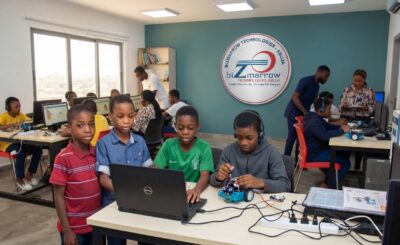
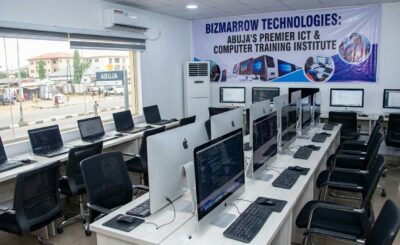
These skills can be learnt at Bimarrow Technologies through both online and physical training programs.
Frequently Asked Questions (FAQ)
-
What is AI for SMEs in Nigeria?
It refers to the use of artificial intelligence tools to help small and medium businesses grow and operate more efficiently.
-
How is AI used in marketing in Nigeria?
Businesses use AI for content creation, advertising, customer targeting, and performance analysis.
-
Can AI replace customer service jobs?
AI can automate basic tasks, but human support is still needed for complex issues.
-
What is AI automation in Nigeria?
It is the use of AI tools to automate business processes like emails, data entry, and marketing.
-
Is AI good for small businesses?
Yes. It helps small businesses save time, reduce costs, and improve efficiency.